Finally! The new LinkedIn AI Slop Button
One small button, and some watermarks will not stop bad AI posts, but it shows where the direction is going. We should use AI to leverage our own thinking instead of trying to outsource our thinking processes to it.
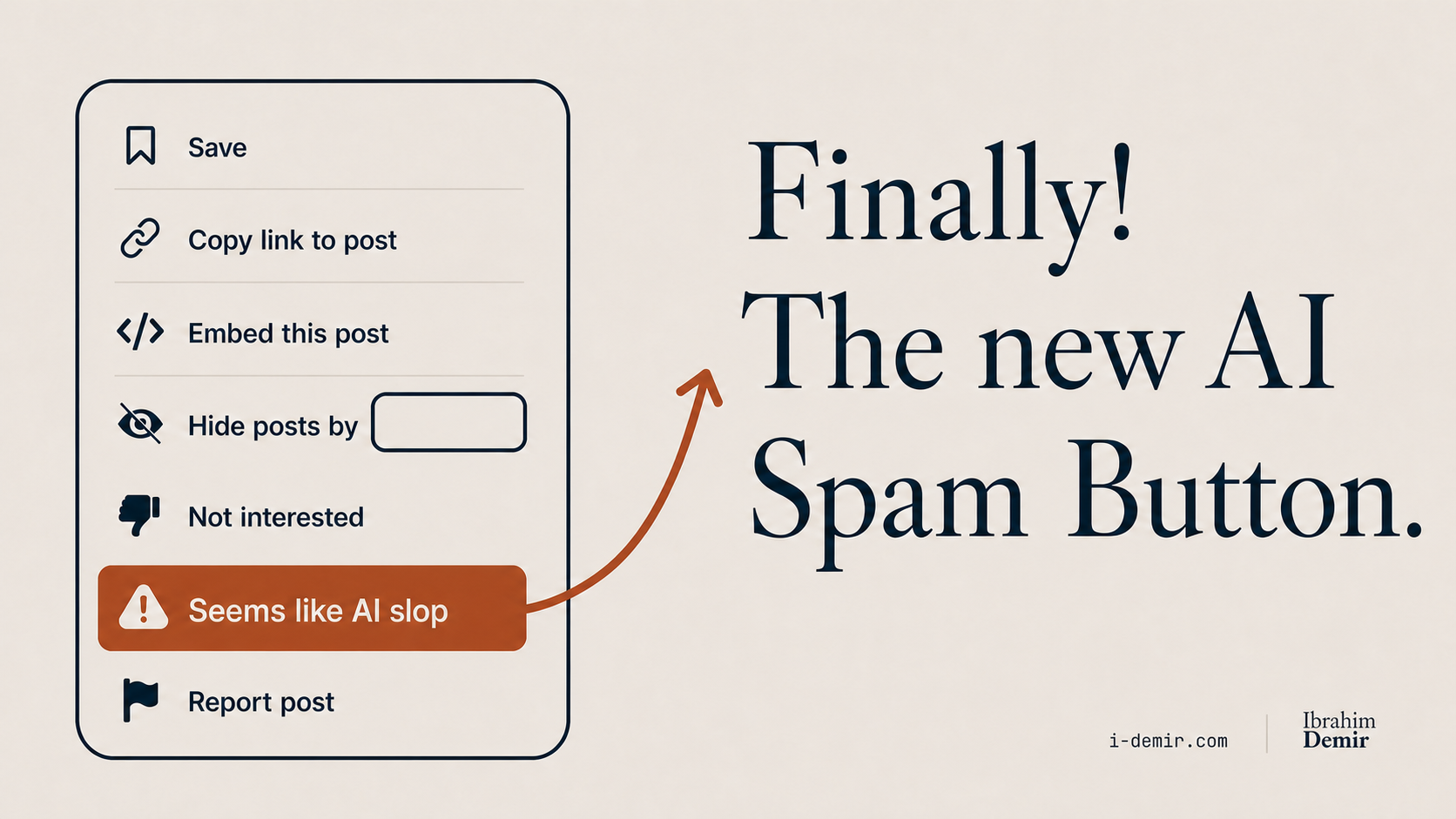
Scrolling through LinkedIn really became a pain. Almost every post sounds the same. Same style, same phrases, same paragraphs, same style of pictures, and also same sentence breaks. There is no authenticity anymore. It seems like everyone has the goal to release as much content as needed to take advantage of the LinkedIn algorithm. The AI text sounds good enough to post it.
Maybe some of you have already seen it. If you click now on the three points of a post, you will see a button “Seems like AI slop”. If you see a post that sounds like AI to you, please use it.
The new EU Artificial Intelligence Act brought a new standard of regulation into the world. I do not want to go into detail about the content of this act, and everyone can have his/her own thought about it, but the fact is, it has already led Anthropic to add a watermark in every text that Claude is generating. Even the ones it only checked for misspellings or errors. This direction shows that in the future we will be able to detect AI text way easier, which will lead automatically to less posts and maybe again to a status where we have been before AI. Hopefully all this actions will lead again to posts, that are written by people who spent time thinking about topics and challenges and put effort in writing an essay or article, because they felt like they had to share this thought with the world. Nowadays people share just to hit the quote and satisfy the algorithm. This needs to change.
One small button, and some watermarks will not stop bad AI posts, but it shows where the direction is going. We should use AI to leverage our own thinking instead of trying to outsource our thinking processes to it.