How AI will transform Project Management
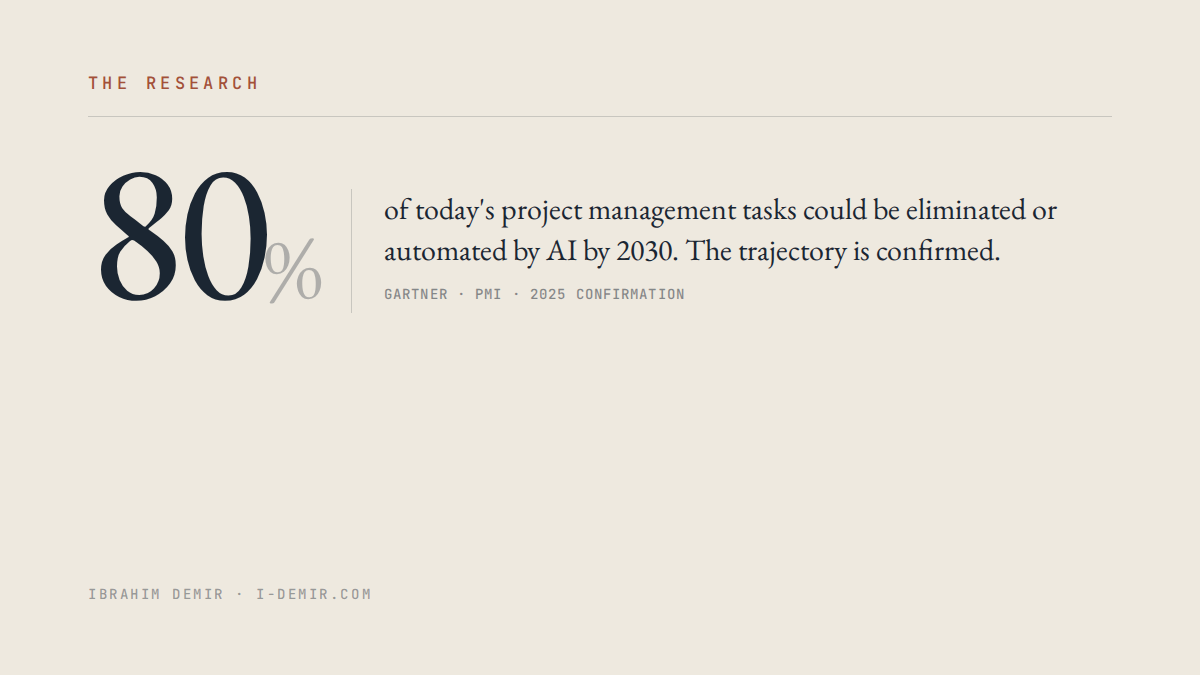
Gartner predicts 80 percent of today's project management tasks could be automated by AI by 2030. That is not a threat to the profession. It is an opportunity — for the project managers who were doing the real job all along.
Most project managers are about to lose the busiest parts of their job. Not their job. The busy parts. That is the distinction almost every conversation about AI and project management misses.
Gartner predicted in 2019 that by 2030, 80 percent of today’s project management tasks could be eliminated or heavily automated by AI. PMI research from 2024, surveying over 2,300 project professionals across 129 countries, confirms that automation is no longer theoretical. Status reports, meeting notes, scheduling suggestions, risk logs, stakeholder updates — AI tools are handling or augmenting all of these right now. PMI data from 500 practitioners already using generative AI shows that high adopters report 93 percent productivity gains versus 58 percent for low adopters. The gap between those who have integrated AI and those who have not is already structural.
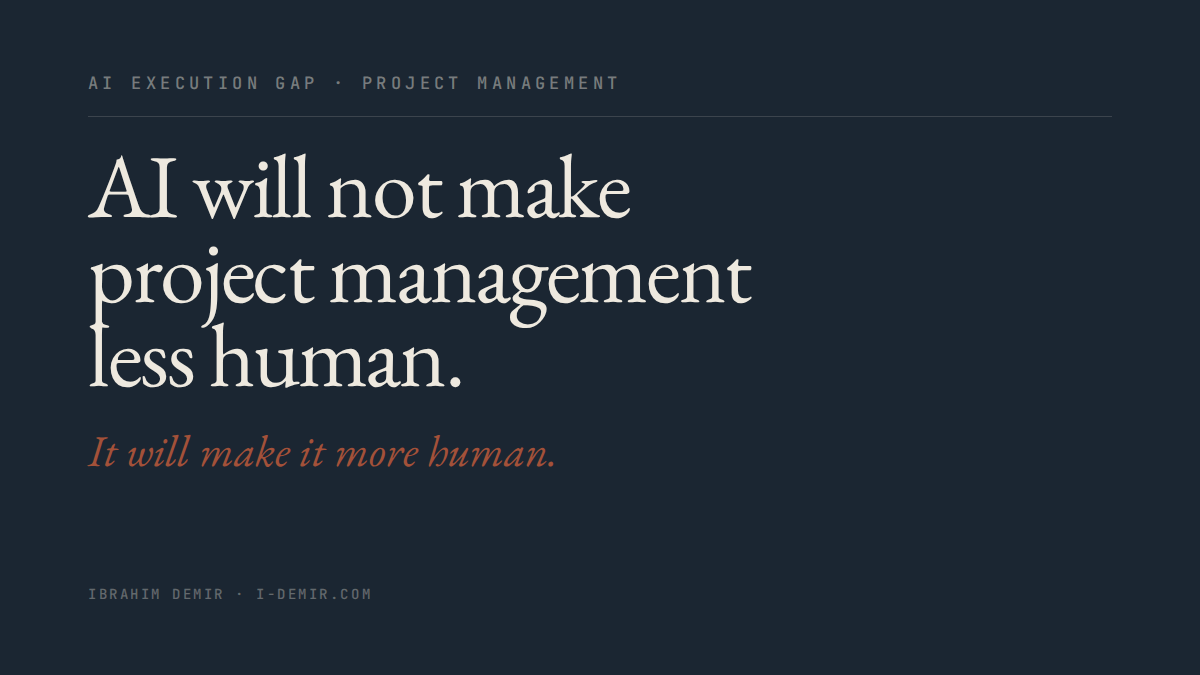
AI will not make project management less human. It will make it more human — because it removes the administrative layer that has buried the profession for years.
The uncomfortable truth is that many project managers have been more busy than valuable. They sat in meetings and wrote notes instead of steering the conversation. They built reports instead of deriving decisions from them. They coordinated instead of leading. This was not laziness or incompetence — it was a response to an environment that measured activity rather than outcomes. AI will change that environment, and in doing so it will make the distinction between administrative activity and real leadership visible in a way that was previously easy to obscure.
Three things AI cannot replace in project management.
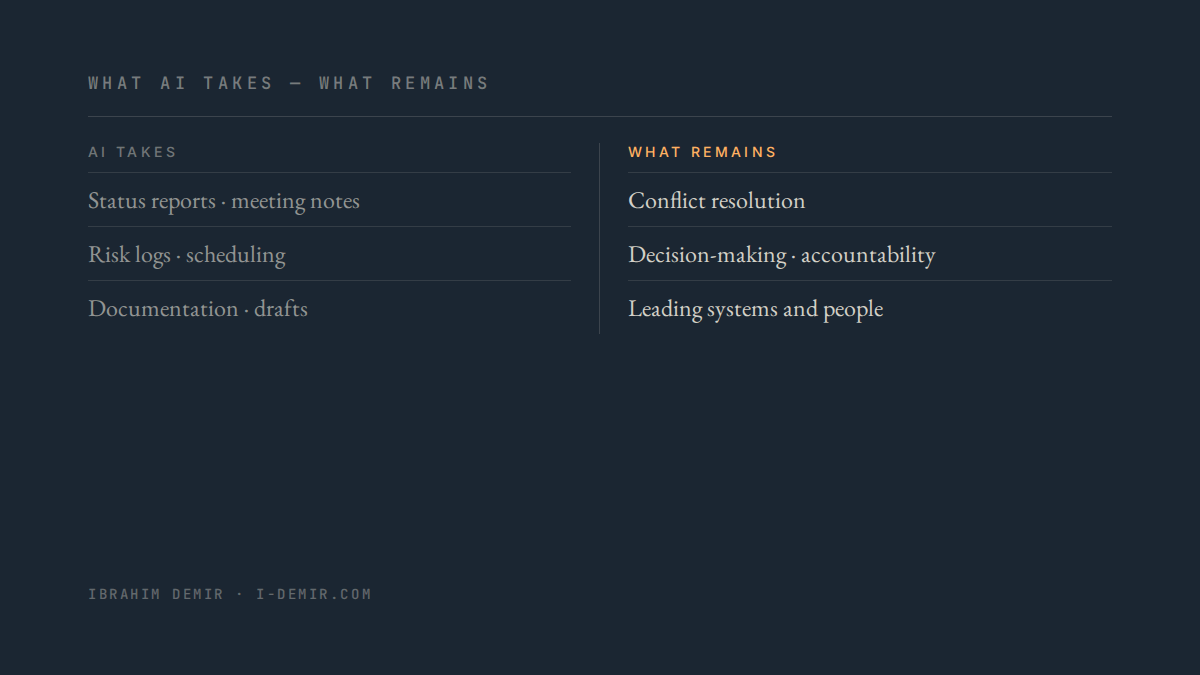
The first is conflict resolution. AI can surface a risk, flag a dependency, or identify that two stakeholders have incompatible priorities. It cannot walk into a room, read the political reality, understand the fears and incentives in play, and get two people who are protecting their territory to make a decision together. That requires judgment, trust, and the willingness to hold a conversation that nobody else will hold.
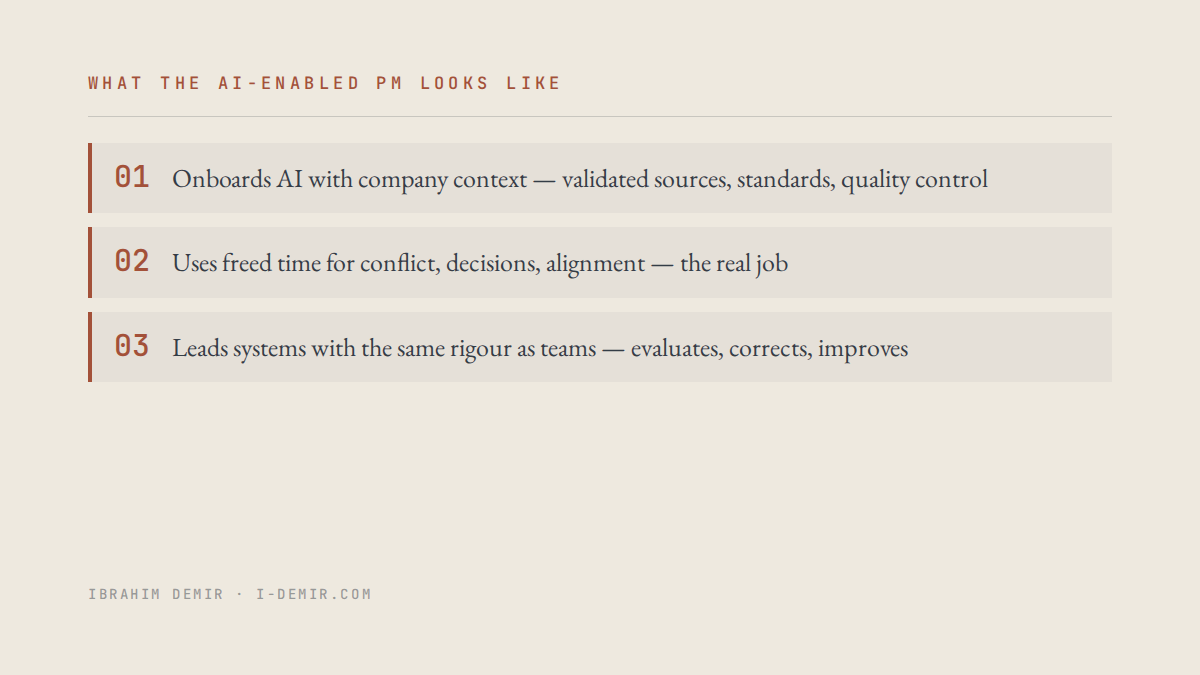
The second is accountability for outcomes. AI produces output. Someone still has to own the result — validate it, challenge it when it hallucinates, make the call when the data is ambiguous, and answer for what happened when delivery falls short. The project manager who understands AI as a team member — providing context, validating outputs, correcting errors, improving quality standards — is a fundamentally different professional than one who delegates thinking to a tool and passes on whatever it returns.
The third is leading systems alongside leading people. The project manager of the future manages two categories of resource: people and AI systems. Leading a system means understanding what input it receives, what output it produces, whether that output meets the required standard, and how to improve it when it does not. This requires a quality logic, a correction instinct, and a willingness to treat AI outputs with the same critical scrutiny that a good leader applies to any deliverable. Most PM frameworks have not caught up with this yet. The project managers who build this capability now will have a structural advantage.
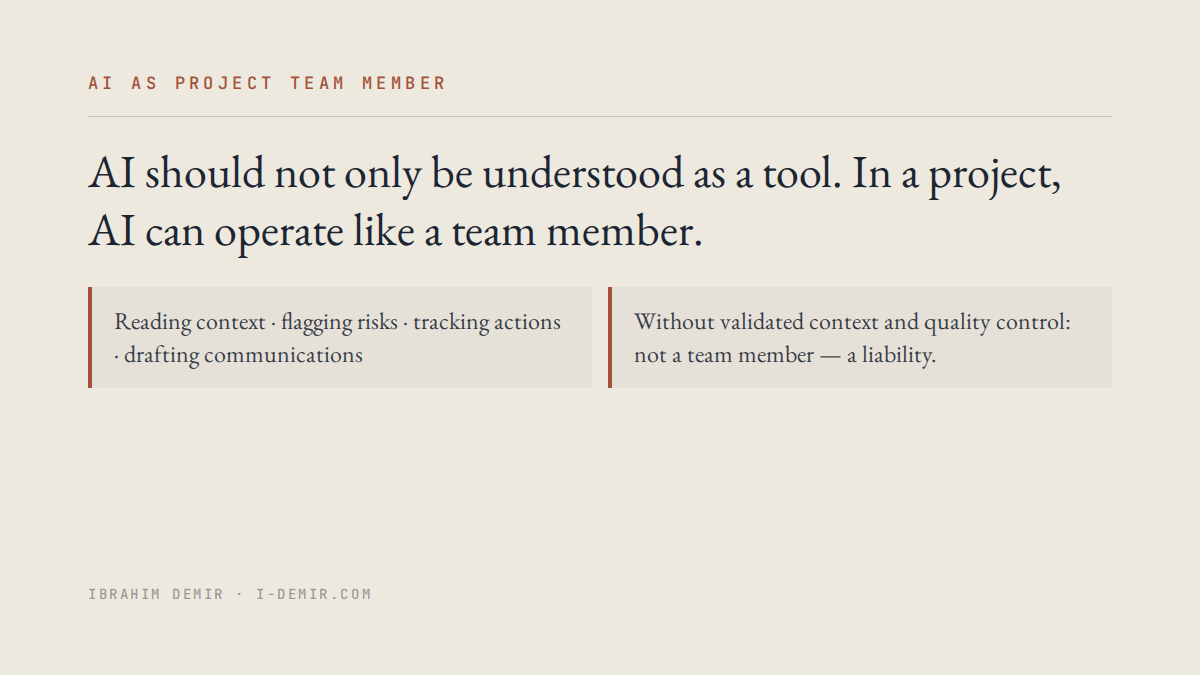
AI will expose the project managers who were coordinators dressed as leaders. It will make administrative theatre transparent and low-value, and it will free the real leaders to spend their time on what only they can do.
That is not a threat to the profession. It is an overdue correction.